 SheepadoodlePup
Giving a Sheepadoodle Manners!
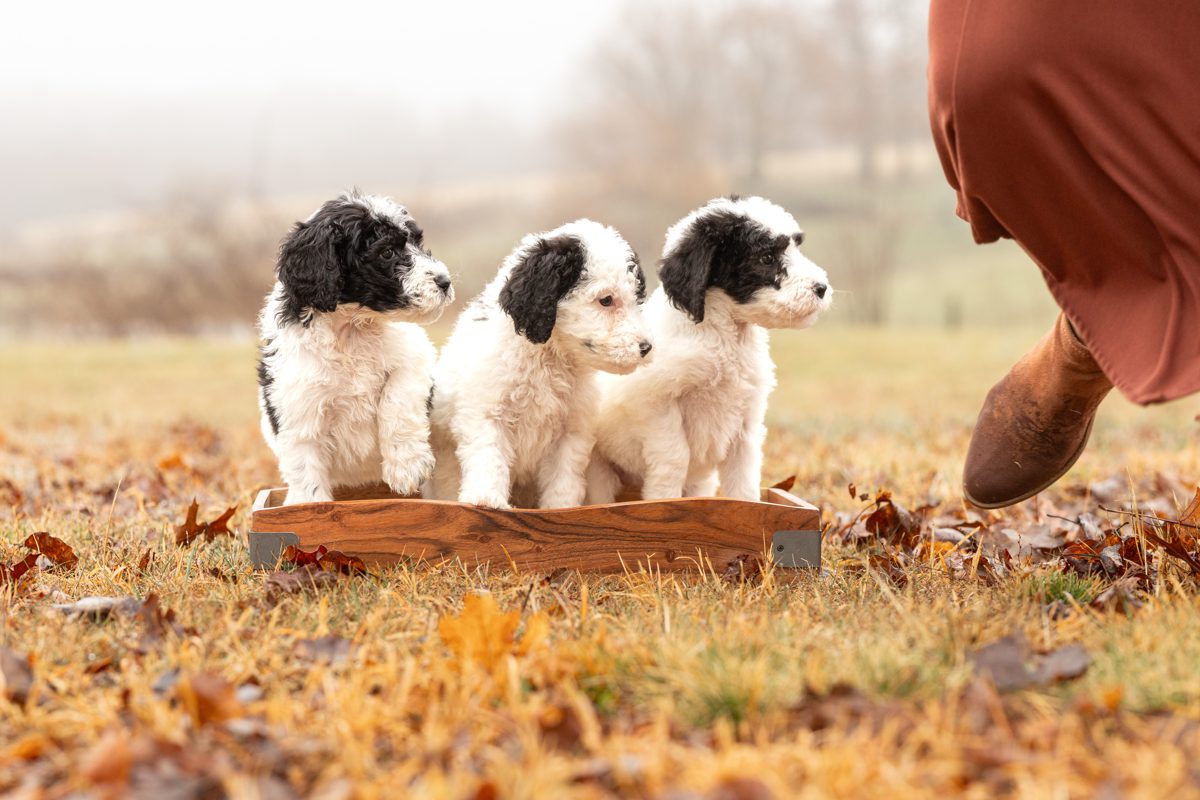
Sheepadoodles are a truly spectacular mix! But almost no dog will just magically learn what you like and don't like him or her doing. Some "manners" that you'll want your pup to learn are universal, and some are unique to your family. For instance, my mom always makes her dogs sit and wait while she fills their food bowl. Some families' dogs are never allowed on the couch, and some families got their pups especially for couch snuggling during Netflix binges. Each family is unique and the manners each family is looking for are unique too.
From the moment you take your puppy home you are training him, so it's important to think through what manners you want your adult dog to have, so that you can reward behaviors that will shape those manners. A well-mannered dog is a beloved part of the family. It is worth the work and effort, and even temporary discomfort, to train your new family member to be as well mannered and likable as possible.
I'll go over some basic manners that I like my dogs to learn and how I go about teaching them.
Sit for attention — don't jump
It is very natural for a dog to jump up on you when they want your attention. And while this behavior is really cute when they're ten pounds, it's a lot less cute, and a bit overwhelming, once they're fifty pounds. Teaching a dog to sit to get attention will endear them to every guest you ever have over. This behavior is easily taught while your puppy is young. It's actually as simple as never rewarding their excited little hops — which is hard when their little hops are so, so cute. But when one of my puppies jumps up on me for attention I ignore them. If the hops and jumping continue I gently lift my knee so they are met with something a little hard. They will soon decide to sit down and think about how they can get to mama's affections again. The second they sit down I shower them with lots of praise and ear rubs. If you are consistent with this approach, before long you'll notice that your pup greets you by politely sitting down in front of you.
Come when called
This behavior doesn't only make your dog easier to live with, it may also save their life one day. When your puppy comes home they naturally come when they hear your excited voice. You may notice this in the videos we post of our puppies — if we squat down and call "puppies, puppies" the puppies come running. Take advantage of this and, countless times throughout the day, squat down and call your puppy. Reward their coming with treats, ear rubs, lots of "good boy," etc. By making coming to you a fun game you reinforce that coming to you is a good thing.
Once your pup comes very consistently in the house, get a LONG (twenty feet or more) leash and a harness. Ask a friend to go out to the yard with you, have them hold your pup by the harness, and you take the leash and go to the other side of the yard, squat down and talk excitedly to your puppy. Once you can see that they are eager to come to you, have your friend release the puppy and, when your puppy starts running towards you, give the "come" command. Continue to practice like this in the yard. Eventually graduate to someplace more distracting like the park, or the local home improvement store. The biggest thing to remember is to always reward your pup when they come to you. Slowly add a command, and slowly add more distractions.
Be content in their crate
Even if you don't regularly use a crate (maybe your pup sleeps in bed with you?), crate training is very helpful in many situations. When your dog goes to the groomer they will likely be put in a crate before and after grooming. If they ever need to have an extended stay at the vet they will need to be comfortable in a crate.
One of the best ways I know of to teach a pet to be comfortable with their crate is to feed them in it. Feeding your Sheepadoodle in their crate creates an inner sense that the crate is a safe and good place. I think it is ideal to rotate feeding in the crate and feeding them out of it where you can access their food bowl to teach sharing (see below). You can also do "crate time" and give your pup an extra-special treat, and have them relax in their crate for an hour or a couple of hours depending on your pup's age. Fill a cow hoof with peanut butter, or have an antler or bully stick that they only get when they are in their crate. Leave the crate open with a nice bed in it, and tuck a few treats into the folds of the bed so that your dog gets rewarded for exploring their crate on their own. Before long you will find that your puppy is very comfortable with their crate.
"Share" their food
When we rescued our first dog, years ago, our crawling daughter liked to crawl up to the dog's food bowl and check it out. She also liked to gently remove our dog's bone from its mouth. Of course I taught her not to do this — every child should learn to not mess with a dog when they're eating! But I was thrilled to see that our dog didn't have any aggressive response. When I got into breeding years later I learned that this is a behavior you can easily teach puppies. When your pup is eating, gently take their food bowl away and offer them a really high-value treat. Your pup learns that having their food messed with isn't a problem — that in fact it brings a huge reward. Once they learn that they don't have to defend their food, you'll find that you are able to reach in and take food or bones away from them and they won't bat an eye. To be clear, I don't recommend just taking your dog's food away when they are in the middle of eating long term. But I would do it a few times every day for a while after you get your puppy to head off any food aggression.
Wait for their food
My mom always has her dogs sit and wait for their food bowl to be filled. She isn't wrestling with a big dog who is trying to eat at the same time she is trying to fill the food bowl. I think this is brilliant. To train this behavior just have your puppy sit, and slowly start lowering their filled food bowl to the ground. When they stand up (and they will!) just raise the food bowl back up. Place your pup back in the sit, and start to lower the food bowl again. Every time your puppy stands, or starts to stand, raise the bowl. When they sit, lower the bowl. Soon your puppy will realize that if they ever want that food bowl to make it to the ground they'd better sit down. Set the food bowl down, give a release word like "ok" and let your pup start eating.
This is a starter list of good manners, but if you focus on the above you will REALLY enjoy your puppy, and so will everyone else who meets your sheepadoodle. What other manners do you like to teach your dogs and how do you teach them? Write me! I'd love to hear about it.
I have learned a lot through watching Leerburg training courses, as well as following Puppy Culture. Much of what I outlined above I've learned from Leerburg or Puppy Culture and adapted for our situation.